


Blocked DPF symptoms and turbocharger problems
Diesel Particulate Filters (DPFs) perform an important function in modern diesel-powered cars, capturing and storing exhaust soot and ash in a honeycomb-shaped substrate made from a special, ceramic material. Those particulates are then burned off as the filter regenerates.
However, if a DPF doesn’t reach the temperature required to burn off the soot and ash trapped in the ceramic honeycomb filter, these particulates will accumulate and eventually prevent the DPF from working properly. What follows is a loss of performance, power, and torque, and, perhaps more importantly, affect your turbo's reliability and longevity.

Here’s a breakdown of symptoms, their underlying causes, and effects you can expect when a blocked DPF starts affecting your turbocharger.
1. Loss of power or poor acceleration
Cause: Exhaust backpressure from a blocked DPF reduces exhaust flow to the turbocharger turbine.
Effect: Turbo can’t generate sufficient boost; the engine feels flat and unresponsive.
Solution:
-
Diagnose DPF backpressure with a differential pressure test, using a Manometer- pressure should read around 10Mb
-
Clean or replace the DPF, and verify turbo boost levels after repair

2. Delayed turbo spool/turbo lag
Cause: Restricted exhaust flow slows turbine acceleration.
Effect: Noticeable lag between throttle input and boost response, especially at low RPM.
Solution:
-
Inspect and, if necessary, clean or rectify the DPF blockage
-
Check for carbon build-up on the turbine wheel
-
Recalibrate the boost control if needed
3. Turbocharger overheating
Cause: High backpressure increases upstream exhaust-gas temperature, leading to overheating of turbo bearings and housing.
Effect: Premature bearing wear, oil breakdown, and potential cracking of the turbine housing.
Solution:
-
Clean the DPF using JLM DPF Cleaner
-
Inspect turbo oil feed and return lines for coking
-
Replace heat-damaged components
4. Unusual turbo noise (whistling, siren, screech)
Cause: Abnormal turbine loading or bearing wear due to backpressure or oil starvation.
Effect: Progressive damage to turbine/compressor wheels, risk of catastrophic turbo failure.
Solution:
-
Rectify DPF blockage
-
Inspect turbo bearings for wear
-
Replace the damaged turbo if noise persists
5. Oil leaks into the turbocharger housings
Cause: Backpressure forces gases past turbo seals or overheats oil, breaking down seal integrity.
Effect: Blue smoke from exhaust, oil contamination of the intercooler and intake system, and loss of lubrication.
Solution:
-
Clean the DPF using JLM DPF Cleaner
-
Inspect turbo seals
-
Clean intercooler and intake piping
-
Replace the turbo if the seals are compromised

6. Frequent limp mode activation
Cause: ECU detects excessive exhaust backpressure via pressure sensors.
Effect: Engine reduces boost and limits RPM to protect components from overpressure damage.
Solution:
-
Verify DPF blockage with scan tool readings
-
Clean the DPF using JLM DPF Cleaner
-
Clear error codes and perform a test drive under load
7. Boost pressure fault codes (P0234 – Overboost / P0299 – Underboost)
Cause: Abnormal exhaust dynamics from a blocked DPF affecting turbo control.
Effect: Overboost can damage pistons/valves; underboost reduces performance and fuel efficiency.
Solution:
-
Repair the DPF blockage using JLM DPF Cleaner
-
Inspect and, if fitted, free VGT vanes
-
Check actuator operation and recalibrate if necessary

8. Soot/carbon build-up on turbocharger components
Cause: Prolonged soot-rich exhaust backflow toward the turbine and variable vanes.
Effect: Sticking vanes, reduced efficiency, eventual turbo seizure if unaddressed.
Solution:
-
Clean the DPF using JLM DPF Cleaner
-
Dismantle and clean the turbocharger
-
Ensure engine combustion efficiency is restored to prevent recurrence
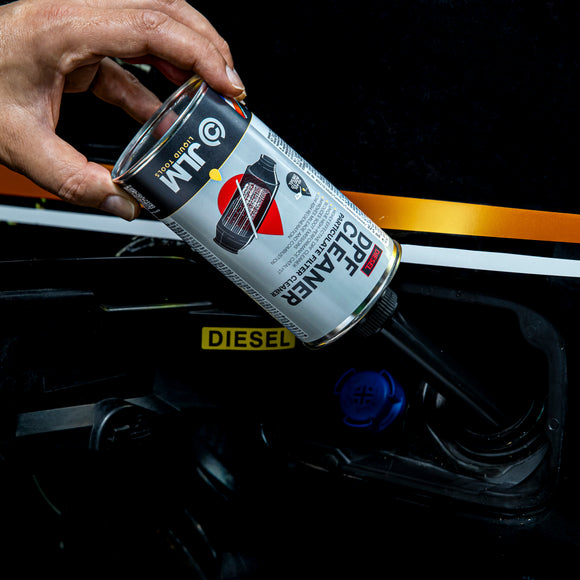
Common causes of a DPF blockage
To keep your diesel engine and its turbocharger operating at optimal efficiency, the DPF must likewise be operating at full capacity. Here are the 10 most common causes of a DPF blockage:
1. Short trips / stop–start driving
Symptoms: Frequent DPF warnings, reduced performance, increased fuel consumption.
Cause: The engine never reaches optimal temperature for passive regeneration.
Effect: Soot accumulates rapidly, triggering early blockage.
Solution:
-
Incorporate regular long drives (highway speeds)
-
Use DPF ReGen Plus or DPF Cleaner to promote normal regeneration as part of everyday driving
2. Faulty exhaust gas temperature or pressure sensors
Symptoms: DPF regeneration not initiating, fault codes logged, limp mode.
Cause: Incorrect readings prevent the ECU from starting regeneration.
Effect: Progressive soot accumulation leading to blockage.
Solution:
-
Test sensors with diagnostic tools
-
Replace faulty units
-
Clear codes
3. EGR valve issues (valve stuck open)
Symptoms: Rough idle, black smoke, increased soot load, reduced performance.
Cause: EGR valve stuck open increases recirculated exhaust gases.
Effect: Incomplete combustion and higher soot production.
Solution:
-
Regular cleaning with the JLM Intake Cleaner Spray will help to prevent the EGR valve from becoming severely contaminated
-
If required, replace the EGR valve
-
Update ECU software if needed

4. Poor-quality or incorrect engine oil
Symptoms: Excessive ash content in DPF, faster clogging despite regenerations.
Cause: High-ash oils leave non-combustible deposits in DPF.
Effect: Permanent ash build-up reduces filter capacity.
Solution:
-
Switch to low-SAPS (low-ash) oil that meets the manufacturer's specs
-
Replace the DPF if saturated
5. Fuel injector faults
Symptoms: Black smoke, poor fuel economy, unburnt fuel smell, high soot levels.
Cause: Over-fuelling from leaking or worn injectors.
Effect: Rich combustion leads to excess soot generation.
Solution:
-
Test and replace faulty injectors
-
Recalibrate the injection system
6. Turbocharger problems
Symptoms: Oil in exhaust, low boost, whistling noise, blue/black smoke.
Cause: Oil seal failure or low boost pressure from a worn turbo.
Effect: Oil burns in exhaust, creating ash and soot.
Solution:
-
Use JLM Turbo Cleaner to remove ash and soot and restore engine power
-
If required, repair or replace the turbocharger
-
Check the oil supply lines and the intercooler
7. Failed or interrupted regeneration cycles
Symptoms: DPF warning light, repeated fault codes, incomplete regens on live data.
Cause: Engine shutdowns or poor regen conditions (temperature, load).
Effect: Unburnt soot accumulates past regen capacity.
Solution:
-
Diagnose the cause of regen interruption
-
Initiate forced regen
-
Resolve the underlying issue
8. Intake system leaks
Symptoms: Hissing noise, reduced power, increased fuel consumption, black smoke.
Cause: Split hoses or loose clamps allowing unmetered air in.
Effect: ECU fuel-air calculations are incorrect, causing soot.
Solution:
-
Pressure-test the intake system
-
Replace damaged hoses/seals
-
Use JLM Intake Cleaner as a preventative method to remove carbon deposits, oil residue, and soot

9. Glow plug or heater circuit failure
Symptoms: Hard cold starts, white smoke on startup, increased soot after cold starts.
Cause: Faulty glow plugs or control module.
Effect: Poor combustion during warm-up creates extra soot.
Solution:
-
Test glow-plug resistance
-
Replace defective plugs/modules
10. Poor fuel quality
Symptoms: Increased soot production, injector wear, rough running.
Cause: High-sulphur or contaminated diesel.
Effect: Incomplete combustion and more DPF loading.
Solution:
-
Drain and replace the fuel
-
Clean the fuel system
-
Source quality diesel
How to maintain a DPF with JLM products
To help keep your costs low and extend the life of your DPF, JLM offer a wide range of products to support different stages of the process for a variety of experience levels and vehicle types:
JLM DPF ReGen Plus for preventive maintenance
JLM DPF Cleaner for use when the DPF warning light comes on
JLM Pre Test Emission Fix (Diesel), which contains a DPF additive to promote regeneration, reduce soot levels pre-MOT
JLM Diesel Extreme Clean for older or rarely serviced vehicles that need a top-to-tail fuel and exhaust system clean, including the DPF
JLM Diesel DPF Refill Fluid to top up the regen additive reservoir on vehicles with an onboard dosing system
JLM DPF Cleaning Toolkit for professional use only, contact us for advice when using this product (call 01273 891162 or email info@kalimex.co.uk)
Learn more about how to clean diesel particulate filters with JLM’s expert advice.
FAQs about blocked diesel particulate filters
How can I prevent a DPF blockage?
To maintain a healthy Diesel Particulate Filter (DPF) and prevent issues, consider adopting the following driving habits:
-
Regular driving at motorway speeds: Take your vehicle on regular motorway drives, especially if it’s primarily used for short trips. Extended motorway driving at slightly higher revs (drop down a gear) allows the DPF to reach higher temperatures, promoting efficient self-cleaning through regeneration.
-
Avoid short trips: If possible, avoid frequent short trips as they may not provide sufficient time for the DPF to reach optimal operating temperatures, increasing the likelihood of soot accumulation.
-
Use high-quality diesel fuel: Low sulphur content minimises soot and ash production, reducing strain on the DPF.
-
Avoid engine idling: Prolonged idling can contribute to incomplete combustion and increased soot production. Turn off the engine when parked for extended periods.
-
Maintain a consistent speed: Smooth, consistent driving without frequent acceleration and deceleration helps optimise combustion and reduce excessive soot formation.
-
Regular maintenance: Follow the manufacturer’s recommended maintenance schedule for your vehicle to ensure the engine, exhaust system, and DPF are in good condition. Use JLM DPF cleaning products to routinely clean your DPF to keep it in good condition.
-
Avoid overloading: Overloaded vehicles may exert more strain on the engine, leading to increased soot production. Adhere to the recommended load limits for your vehicle.
-
Keep air filters clean: A clean air filter ensures proper airflow, which contributes to efficient combustion and reduces the likelihood of DPF issues.
By incorporating these driving habits, you can promote the longevity and optimal performance of your DPF, minimising the risk of blockages and associated problems.
How do I know when to replace my DPF filter?
DPF replacements can be very costly, which is why it’s so important to know when it’s time to replace one, so you can prepare for the options available. Signs that a DPF needs replacing include:
-
Reduced vehicle performance
-
Increase in smoke, particularly black smoke
-
DPF warning light continues to come on despite attempts to clear blockages
-
A change in smell coming from your exhaust
-
Increased fuel consumption
-
A change in the sound of your engine
-
Reduced acceleration and poor throttle response


